Palette Navigation Bar
Feed on
Posts
Comments

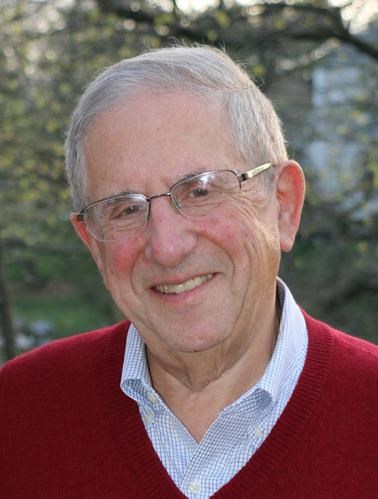
If you have ever come to an opening at the Solowey Studio there is a good chance you saw my dad, Marx S (Sandy) Leopold. For the first fifteen years you could have missed him as he was dressed like everyone else. But after he started to make annual visits with me and my two brothers to New Orleans for the Jazz and Heritage Festival, known by almost everyone as “Jazzfest,” he almost always wore one of his Hawaiian styled Jazzfest shirts. In the early days he helped my mother bring her many baked goods as well as directing traffic in and out of our parking area, but soon he simply enjoyed the company of the many family members attending whether in the studio or down at the house. We would often go out to dinner after the opening, and he reveled in being surrounded at the table by his offspring and their offspring. An only child, he was now the patriarch of a 26-member clan.

Sandy, 87, of Malvern, Pennsylvania, passed away peacefully on April 1, 2026. Born on December 2, 1938, in Philadelphia, Sandy lived a rich and meaningful life marked by intellect, humor, generosity, and a deep love of family.

A graduate of Cheltenham High School, Dickinson College, and Dickinson Law School, Sandy built a distinguished career in public service. He served as Assistant Attorney General and General Counsel for the Pennsylvania Department of Public Welfare, and worked closely with state government leaders, including as a Senior Budget Analyst for the Pennsylvania State Senate. He was proud of the late nights spent helping negotiate state budgets and getting the language “exactly right.” He was an expert at the legislative process and used it to advance goals that made a difference in people’s lives. He also served or supported the work of several important institutions and boards, including the Academy of Vocal Arts, the Public School Employees’ Retirement System (PSERS), the Milton B. Asbell Center for Jewish Life at Dickinson College, and the Drexel President’s Leadership Council and College of Medicine.

He was kind, witty, and wise. He loved to tease, had a hearty laugh, and could command a room simply by raising a finger, lowering his glasses, and saying, “Now let me tell you something….” He loved jazz, baseball, history, economics, his Wall Street Journal, vintage Matchbox cars, Joanie’s sticky buns, long walks with Mia, and his annual trips to the Jazz Fest with his three sons.

Above all, Sandy believed in family. He thought people should sit down together, share a meal, work things out, and enjoy one another. He lived with ethics, integrity, and gratitude, always trying to make the most of the life he had been given.

Sandy was the beloved husband of the late Joan Yaverbaum Leopold, whom he met as a teenager. They attended Dickinson College together and shared 44 years of marriage. In later years, he found companionship and adventure with his partner, Mia Marcovici, with whom he traveled the world from 2006 to 2024.

He was predeceased by his parents, Marshall and Hermine (Berg) Leopold; sister, Ann Leopold; wife, Joan Yaverbaum Leopold; partner Mia Marcovici; and daughter, Ann Kaplan (Larry) He is survived by his children Matt (Catherine), John (Teresa), David (Laura), & Debbie Stern (Jonathan) and sister-in-law, Jeri Yaverbaum Greenberg (Eddie). He was a proud grandfather to Danielle, Sarah, Rose, George, Mia, Jeremy, Anastasia, Emma, Abigail, Ilana, Henry, Daphne, and a loving great-grandfather to Axel and Wesley.

In lieu of flowers, donations may be made to the Dauphin County Library System’s Joan Y. Leopold Children’s Book Week Endowment Fund (https://tinyurl.com/DCLSJYL ) or to Beth El Temple in Harrisburg, PA.
Ogla Baclanova

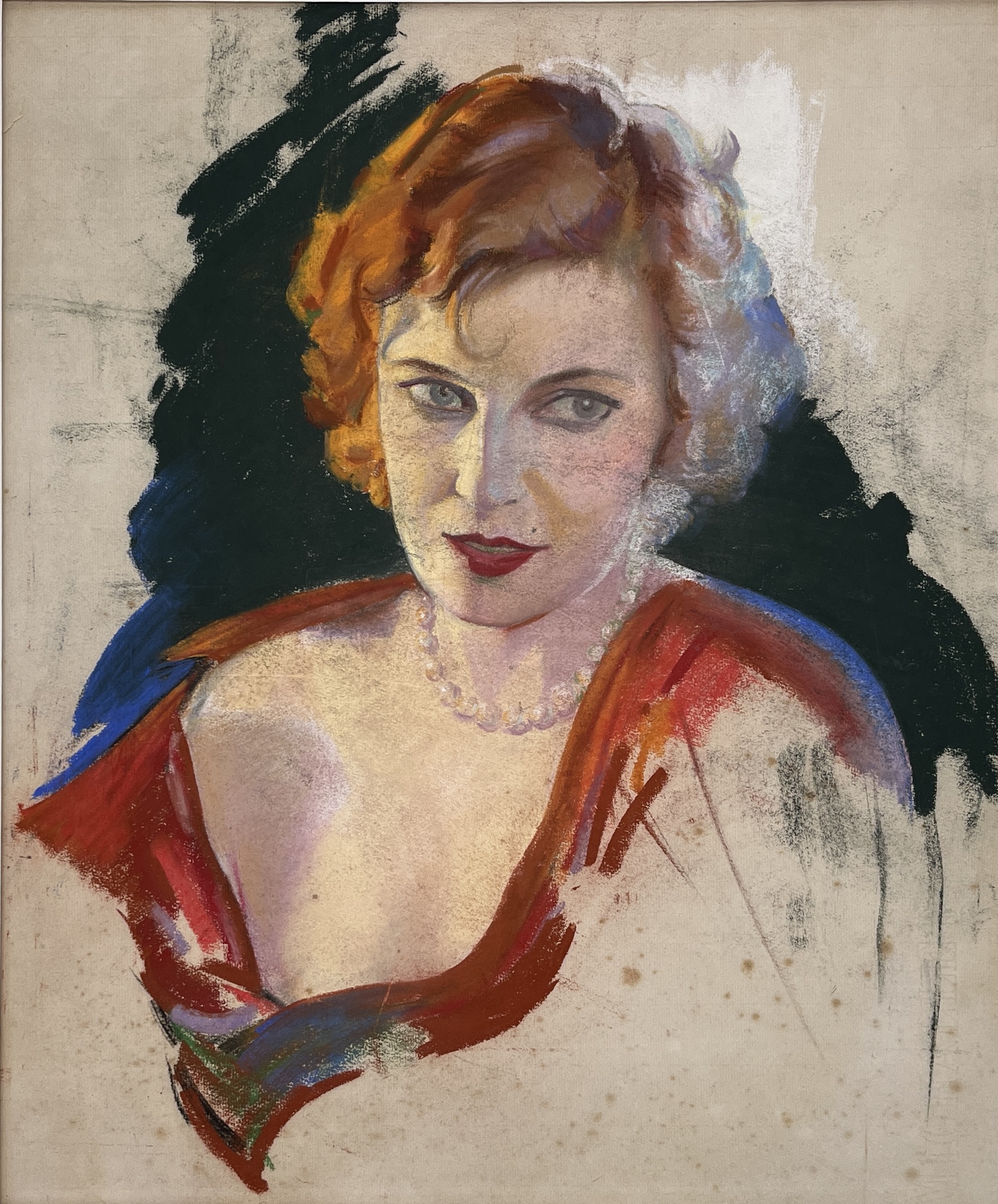
Olga Baclanova. Pastel on paper, 30 x 25 inches. 1928

Olga Baclanova. Pastel on paper, 30 x 25 inches. 192

Even in his twenties, pastel played a role in Ben Solowey’s art and led to some of his best-known work.

After returning from a five-month sojourn in Europe in the fall of 1924, Ben Solowey supported himself in Philadelphia as a decorative painter recreating Old Master still lifes and game paintings for interior decorators and furniture stores, while continuing to show his own award-winning work in exhibitions around the city. When he left for New York four years later, he also left behind his decorative work. New York had fourteen daily newspapers, and all of them featured drawings as they were easier to reproduce than photographs, particularly in the Drama sections of the papers, which included many drawings of performers who were to open on shows on Broadway, in movie theaters, or perform on a concert stage. With his affinity for portraiture, Ben Solowey decided he would become a newspaper contributor.

Despite having no connections, Ben was undeterred from approaching editors of The New York Herald Tribune, The New York Times and other papers with an example of his work. He could have chosen to show his remarkable charcoal portrait of a cleaning woman from the Pennsylvania Academy of the Fine Arts that had won him the Ramborger Prize at the school and was featured in the school’s catalogue. Instead, he created a stunning pastel portrait of the Russian born actress Olga Baclanova from a black and white photo he found of her, presumably in a movie magazine at the time.

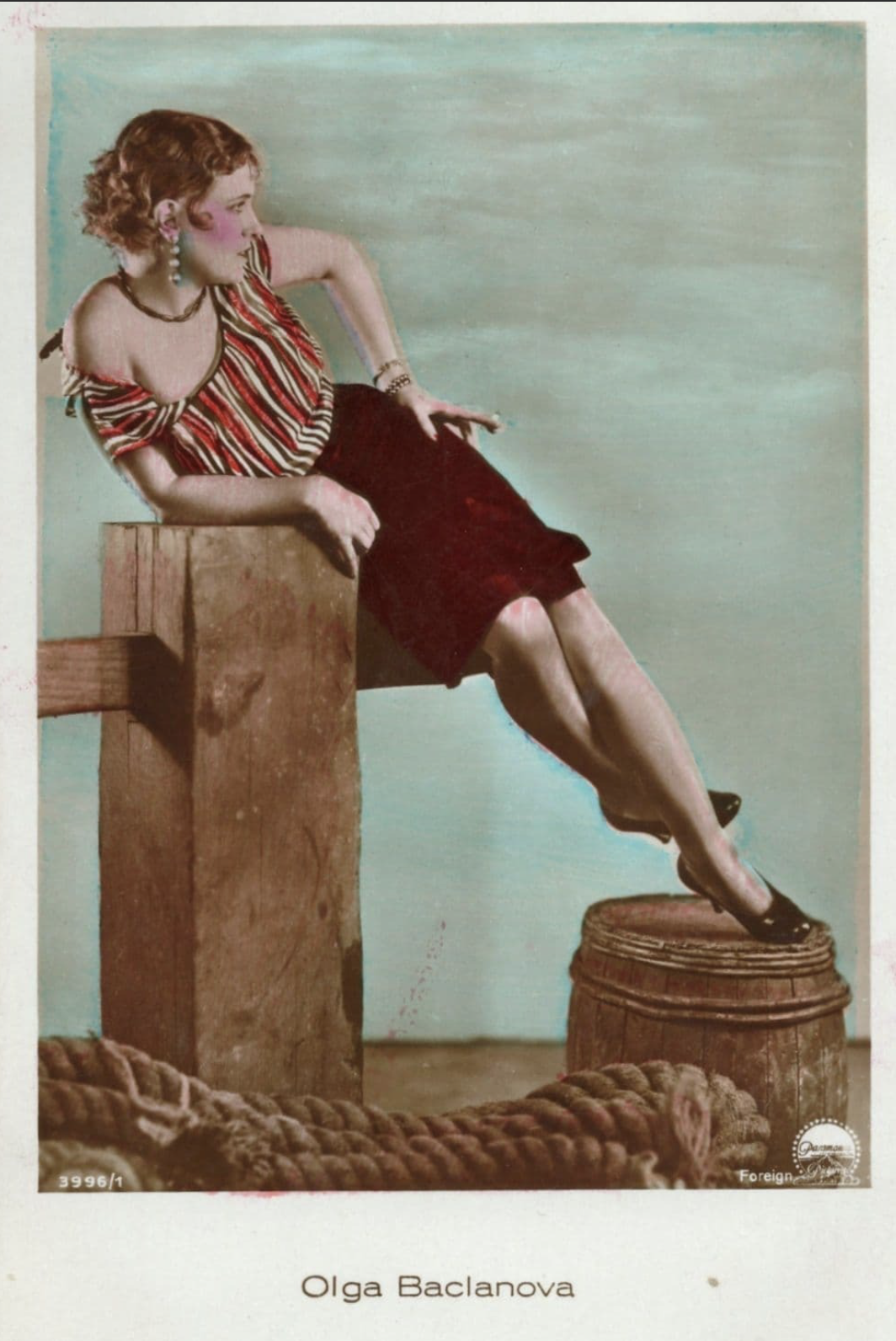
Olga Baclanova. Hand colored photo postcard. c. 1928

Olga Baclanova. Hand colored photo postcard. c. 1928

Baclanova was born in Russia in the late 1800s and as a teenager was accepted into the Moscow Art Theatre (M.A.T), an invitation, according to some reports, that came Konstantin Stanislavski himself.  She had significant roles in plays by Ibsen, Chekhov and Turgenev, and M.A.T productions of Shakespeare and Dickens. She also starred in Russian films, and by 1925 she was named a “Merited Artist of the Republic”, the highest Soviet artist honor.

After touring America in 1925 in a M.A.T. production of Lysistrata, she remained in America when the troupe returned home. She appeared on stage in southern California before soon finding work in Hollywood silent films. By 1928, Baclanova was at the height of her fame. She appeared in seven feature films (and two shorts) that year, including the now classic The Man Who Laughs. Judging by film stills, Ben may have used one from the 1928 film, The Docks of New York, as a visual reference for his portrait.

Olga Baclanova in The Docks of New York. 1928. Directed by Josef von Sternberg.

Olga Baclanova in The Docks of New York. 1928. Directed by Josef von Sternberg.

If Baclanova is known at all today, it is because in 1932 she starred as the scheming trapeze artist Cleopatra in Tod Browning’s unsettling film Freaks. Her film career began to slow after that, and while she did perform on Broadway, most notably in the hit Claudia in 1941 as Madame Daruschka (a role she would reprise in the film adaptation two years later), she would slowly disappear from the world of the performing arts. She died in Switzerland in 1974.

This portrait, which has never been published, was distinctive enough that editors began to give Ben assignments for performer portraits. Ben’s “Theatre Portraits” (as he called them) began to appear in January 1929, the start of 12 year career in which he drew close to 900 charcoal portraits for New York newspapers, almost all from life. As vivid as this colorful pastel portrait is, either Ben or his editors realized that a black and white charcoal drawing would be more dramatic in the newspaper. Ben would be among the first artists to exploit half tone in newspaper reproductions and quickly having Solowey draw your portrait was a sign that one had “arrived.” It certainly the way that many learned of Ben and his work as his regular Sunday “exhibition” in the papers reached millions more viewers than any picture in a gallery or museum. And to think it all started with a pastel.

The Yellow Dress

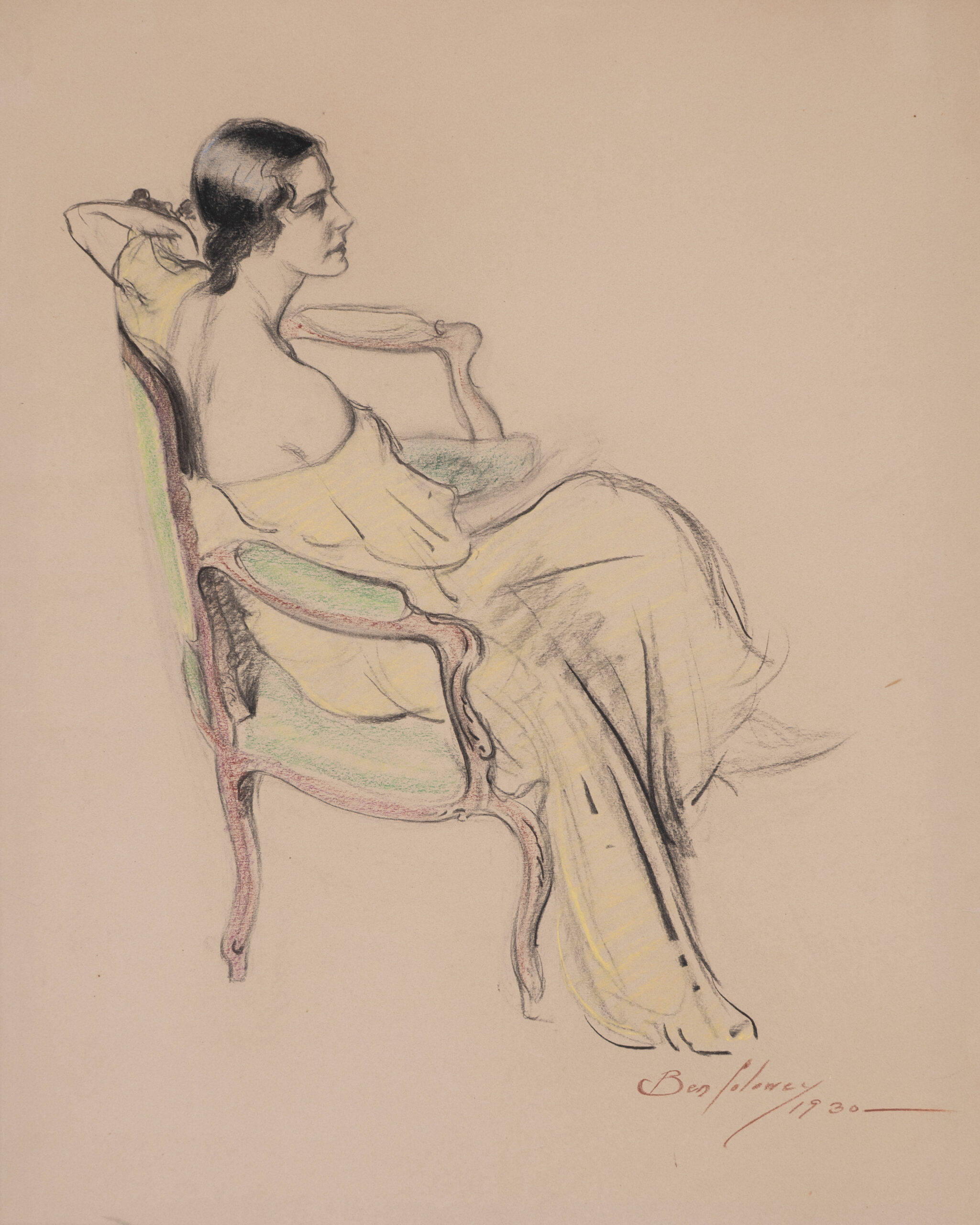
Yellow DressPastel on paper, 25 x 19 inches. 1930
Ben Solowey portrait of wife Rae seated on French love seat on brown paper.

Yellow Dress. Pastel on paper, 25 x 19 inches. 1930

The story of Ben Solowey meeting Rae Landis is legendary. He fell in love with her the first time they met, and he proposed on their first date two days later. It took Rae about a week to say yes. and they decided to get married right away. When Ben’s brother died when a car hit him as stepped off a curb, the wedding was postponed a month. Ben and Rae met on April 5, 1930, and were married June 8th of the same year.

They were married in a kosher restaurant in Manhattan in a simple ceremony. Rae’s mother met Ben for the first time that day. Her father had come to New York earlier to size up his prospective son-in-law, and, according to Rae, on handshake, the variety store owner said approvingly that Ben was “all wool and a yard wide.”

Rae did not wear a traditional white dress for her wedding, but a lovely yellow, off the shoulder gown that would become a part of her wardrobe. She wore it in at least three paintings and drawings by Ben, including this pastel, signed and dated 1930. It is unlikely that this was drawn on their wedding day as Rae was just starting to pose for Ben at that time. It was likely created after their wedding, perhaps after their honeymoon in Casco Bay, Maine that summer. It is the earliest known portrait of Rae in pastel, and like so many others, he captured her in profile. Ben would continue to draw pastel portraits of Rae throughout their marriage, including, what Rae considered her final portrait nearly forty years later (where she was also shown in profile).

This work has only been exhibited at the Solowey Studio in only three exhibitions dating back to 1997. It was last seen on an easel in the Main Studio two years ago, but it will be featured in the new exhibition, Painting Without a Brush: Pastels by Ben Solowey.

Philip Barry’s play, The Philadelphia Story debuted on Broadway on March 28, 1939. Barry had written the romantic comedy specifically for Katharine Hepburn, and she was so eager to rid of herself of the stench of “box office poison” after her last few films had failed, that she became an unbilled producer of the play with the Theatre Guild, and took no pay but got a portion of the show’s profits. And it was hit, running for 417 performances in a little more than a year. It would have undoubtedly won several Tonys, but they had not yet been created.

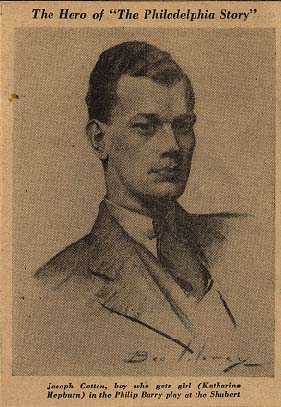
Clipping of Joseph Cotten in The Philadelphia Story. 1939

Ben Solowey drew five members of the cast of the Broadway production. The first was Hepburn’s co-star Joseph Cotten who originated the role of C.K. Dexter Haven, played in the film by Cary Grant. Cotten loved his portrait so much he purchased it for $50, which he paid in $10 installments over several months.

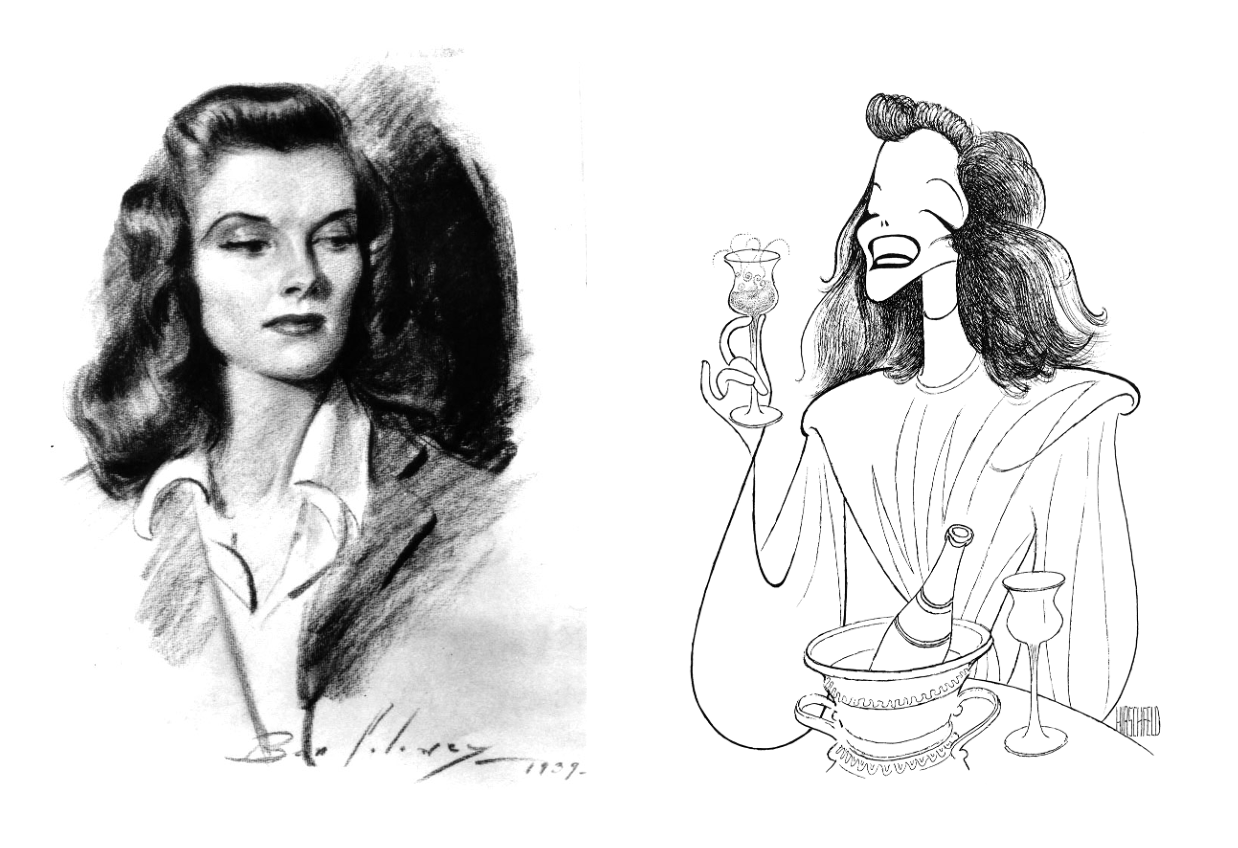
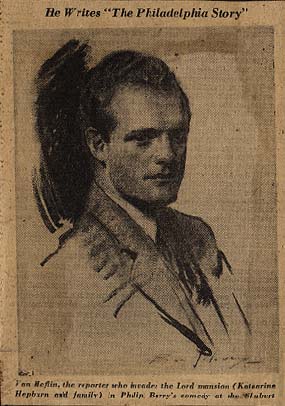
The Herald Tribune asked Ben for a portrait of Hepburn and her other co-star, Van Heflin, who played the role that won Jimmy Stewart his only Oscar. “I was told, ‘She’s rough; she’ll give you a hell of a time,’” remembered Ben to a Philadelphia Inquirer reporter in 1977. “I went backstage after seeing her in The Philadelphia Story. ‘All right,’ she said, ‘let’s go,’ and about midnight I went with her and one of her co-stars, Van Heflin, to her apartment. I had he sit on her kitchen table for a couple of hours. She offered me a drink and a banana. And she was so pleased with the drawings she bought it.” Hepburn paid for her drawing with one check, less than three weeks after it appeared in the paper, and so did Van Heflin.

Clipping of Van Heflin in The Philadelphia Story. 1939

Despite showing regularly with painters like Picasso, Matisse, de Kooning and Hopper, painting great canvases, restoring his 34-acre farm, the thing that people remembered about Ben was his interaction with Hepburn. When asked about her, he would simply reply that she had a good head, which caused people to send him clippings of her picture whenever it ran in the paper. Rae would eventually tack some of those clippings, along with one of Ben’s drawing on his studio door.

Al Hirschfeld did not draw the original production while it was on Broadway, but he did contribute thumbnail portraits of New York theater critics whose complimentary blurbs about the show were on the back of the souvenir program. Although he would draw Hepburn in several stage productions and many of her films, he did not draw her in the role again until the 1973 book, The Lively Years by Brooks Atkinson, which he illustrated.

In 1990, he was commissioned to draw her again in this iconic role. He liked it so much he asked for a full-size reproduction to be made that he inscribed and sent over to her. It turned out that Hirschfeld and Hepburn had a mutual admiration society for decades, and she collected a number of his drawings of herself for her home. This drawing proved to be so popular that it was published as a hand signed, limited edition lithograph, one of which will be in the Hirschfeld exhibition. You can see both “Kates” during the run of this exhibition.

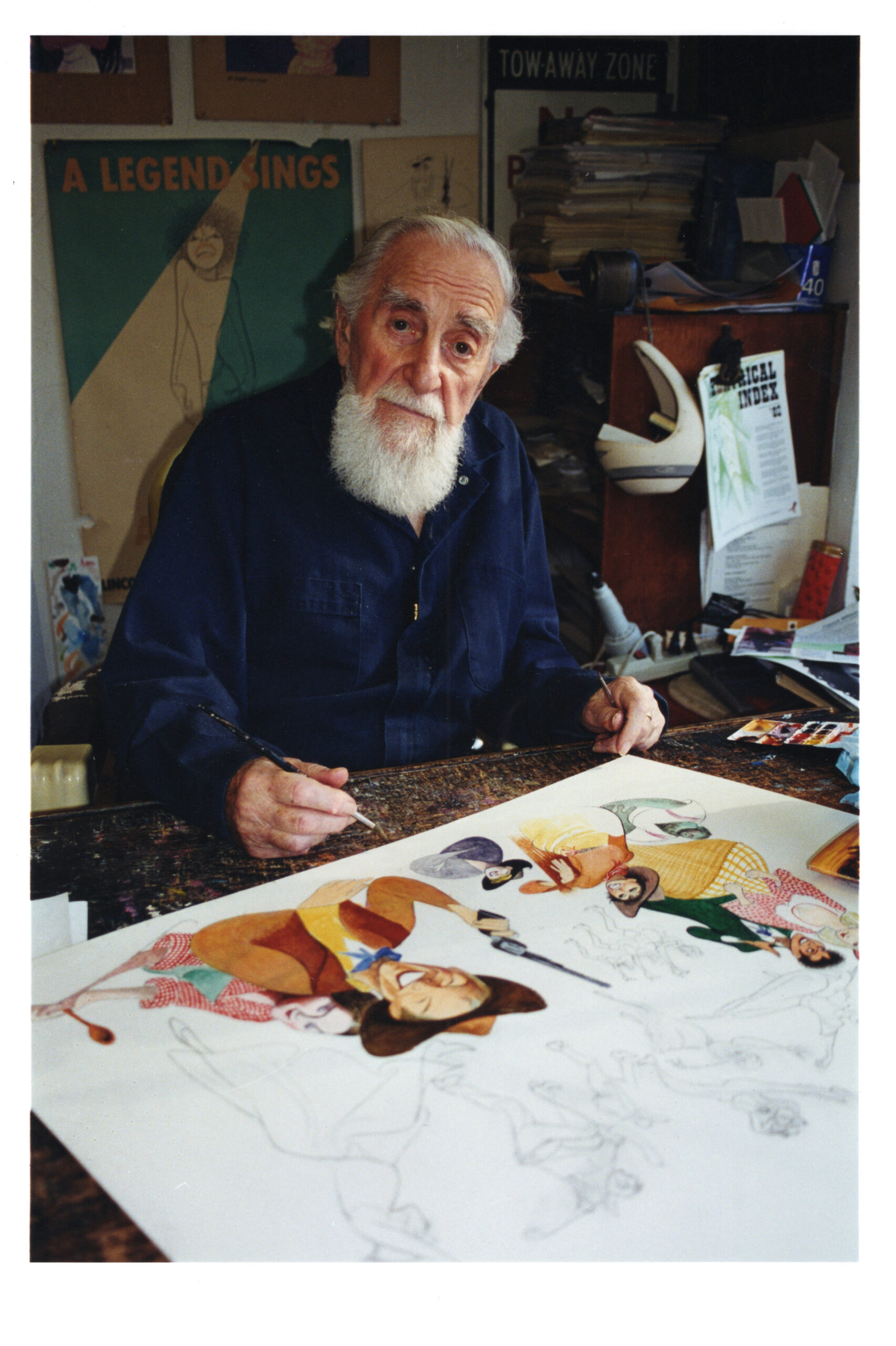
Al Hirschfeld sitting in his studio working on a one of his drawings. Bringing Al Hirschfeld’s art to the Solowey Studio is very special to me. As many of you know, I spent thirteen years visiting Hirschfeld in his studio at least once a week to organize the archive of his career. We became quite close. I organized the first museum retrospective of his artwork, as well as the first exhibition that explored his art of the movies, which I put together for the Academy of Motion Picture Arts and Sciences, and which subsequently toured internationally. I also wrote the best-selling companion book, Hirschfeld’s Hollywood. Although many know him for his drawings of the American Theatre, he got his start drawing films for studio publicity departments, and his first published caricatures were of film performers. When his first theatrical caricature appeared in December 1926, he was already a six yar veteran of films studio. We went through a lot together: the death of his wife Dolly Haas, the birth of my son, 9/11, a lawsuit with his gallery, and the announcement that a Broadway theatre was to be named in his honor. When the nonprofit Al Hirschfeld Foundation came into being by the terms of his will, I was the first hire, and I am now the Creative Director of the Foundation. He was a good friend and great supporter of me and my career, and like so many others, I had loved his art since I was child.

In 2003, we mounted a show titled “Side by Side” that explored how both Hirschfeld and Solowey saw shows on Broadway in the 1930s when their work literally appeared side by side in New York newspapers. It was a fascinating overview how two unique artists saw the shows that shaped the American Theatre. We are not remounting that show. This exhibition will show Hirschfeld’s incomparable portraits of performers and productions that defined American popular culture in the 20th century. From Duke Ellington to Liza Minnelli; from Rodgers and Hammerstein’s Carousel to Star Trek. This will be a combination of Hirschfeld’s ink on board drawings and his hand-signed limited edition prints that will need to be seen to be believed.

All sales of Hirschfeld art directly benefit the Al Hirschfeld Foundation’s mission which is “to promote interest in the theater and dramatic arts by supporting not-for-profit museums, libraries, theaters and similar cultural institutions” around the country. We have created an infrastructure where the overhead of the Foundation is almost non-existent, so that all funds raised go directly to its mission.

This is a special for me, and I think it will be for you. I hope you will visit.

Three Still Lifes

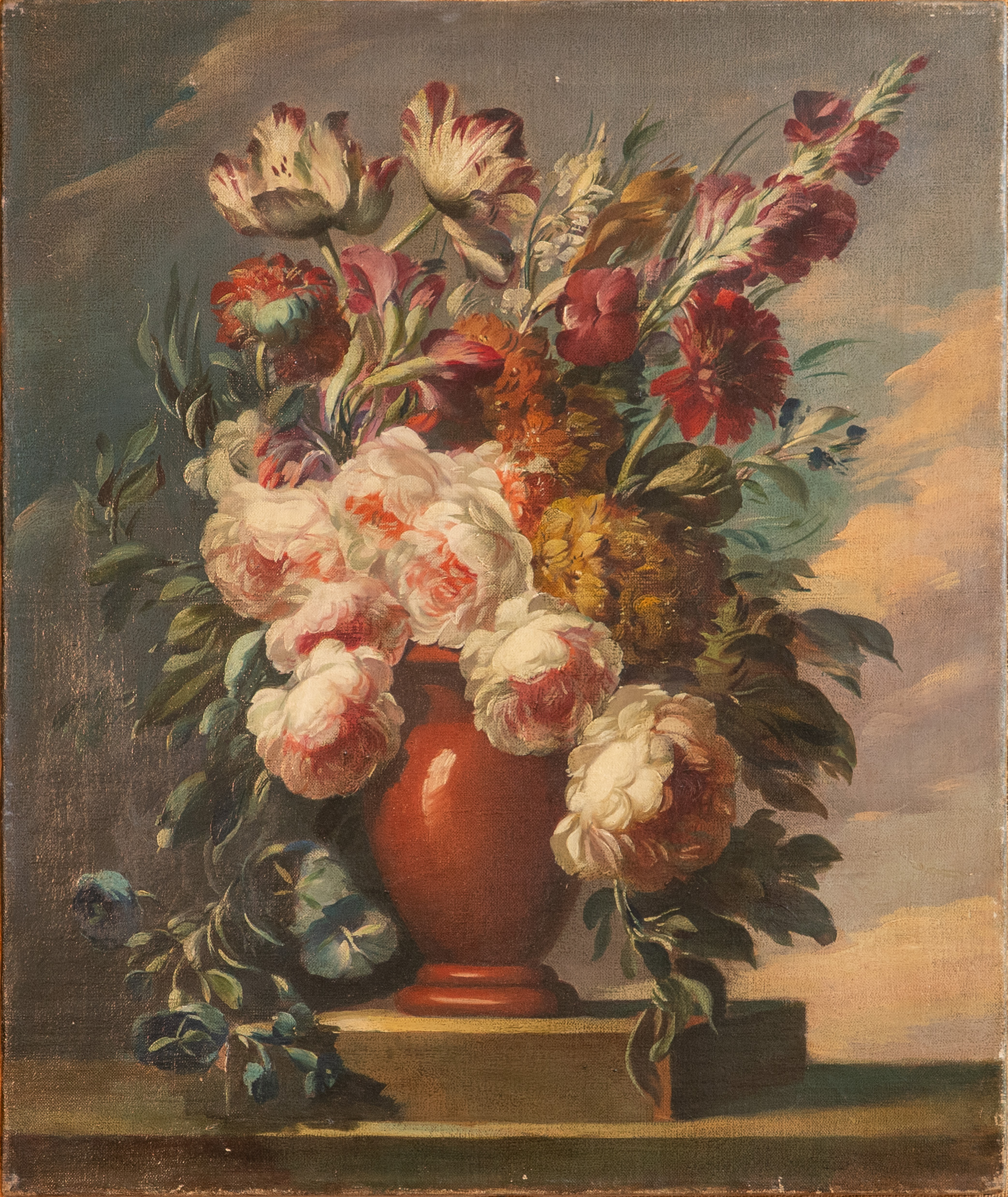
Old Master Still Life. Oil on canvas, 24 x 20 inches, c. 1925-28.

The Reiskin Collection has three interesting still lifes that highlight different periods in Ben’s career. The first is an Old Master Still Life that dates from 1925-28. This is an example of the decorative paintings Ben produced after returning from Europe in late 1924 to support himself. For more on Ben’s decorative painting check out this post. It is somewhat unusual as the heavy varnish Ben put on these paintings to make them appear to be several centuries old has been removed. It most likely that a conservator dissolved the varnish not knowing it was the finishing element of the work. Consequently, it gives us a clear picture of the vitality of these still lifes as Ben painted them.

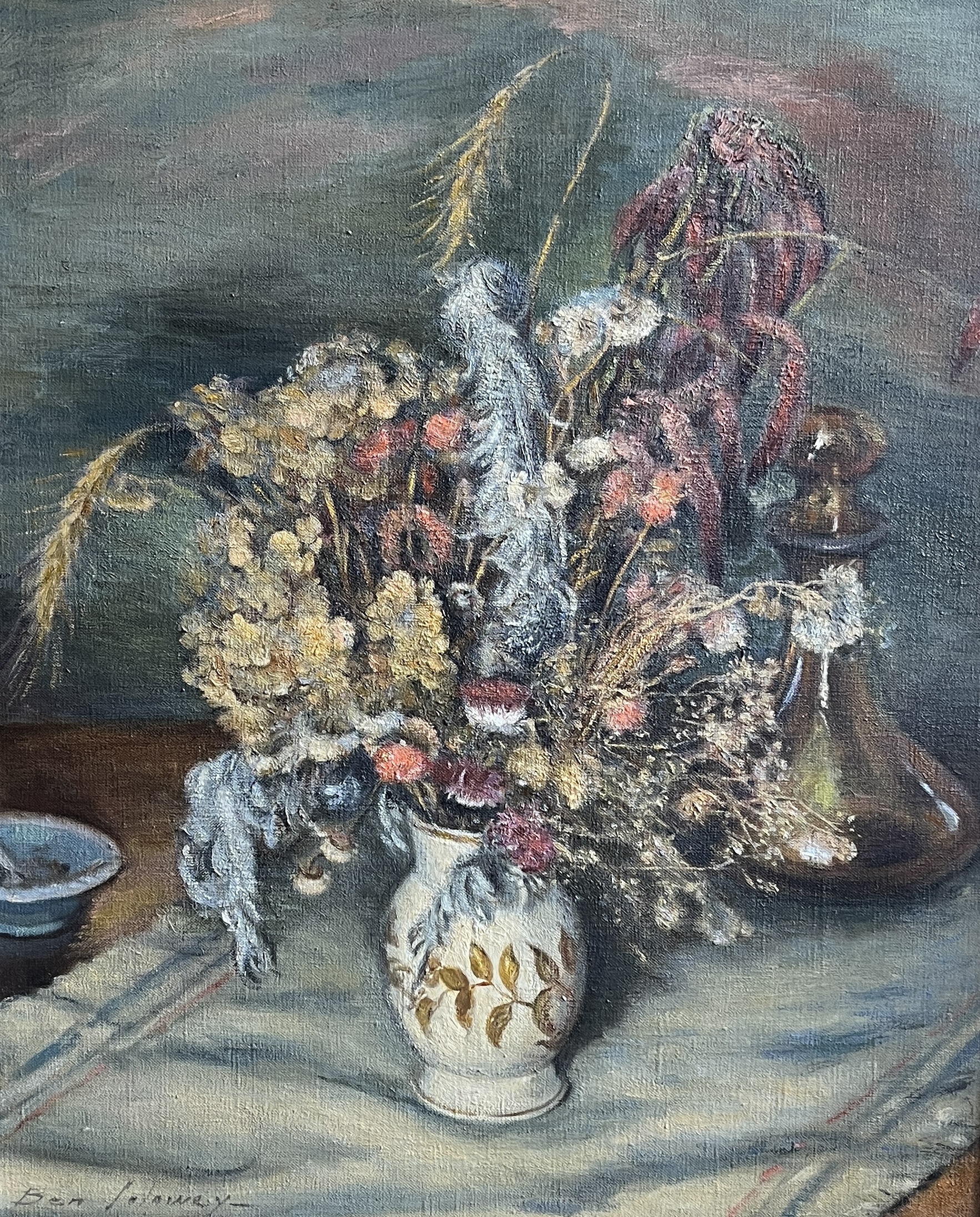
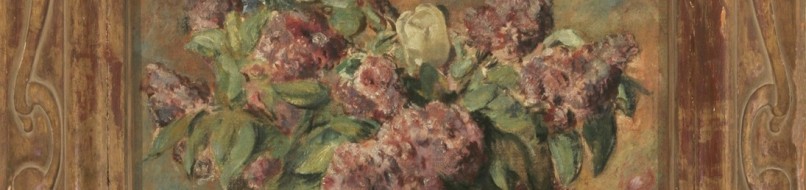
Dried Flowers. Oil on canvas. 30 x 25 inches. c. 1930s

The second is Dried Flowers. This lovely 30 x 25-inch oil is undated, but judging by its color palette it was most likely painted in New York in the 1930s. Ben’s palette was filled with blues, blacks and reds when he painted in the city.

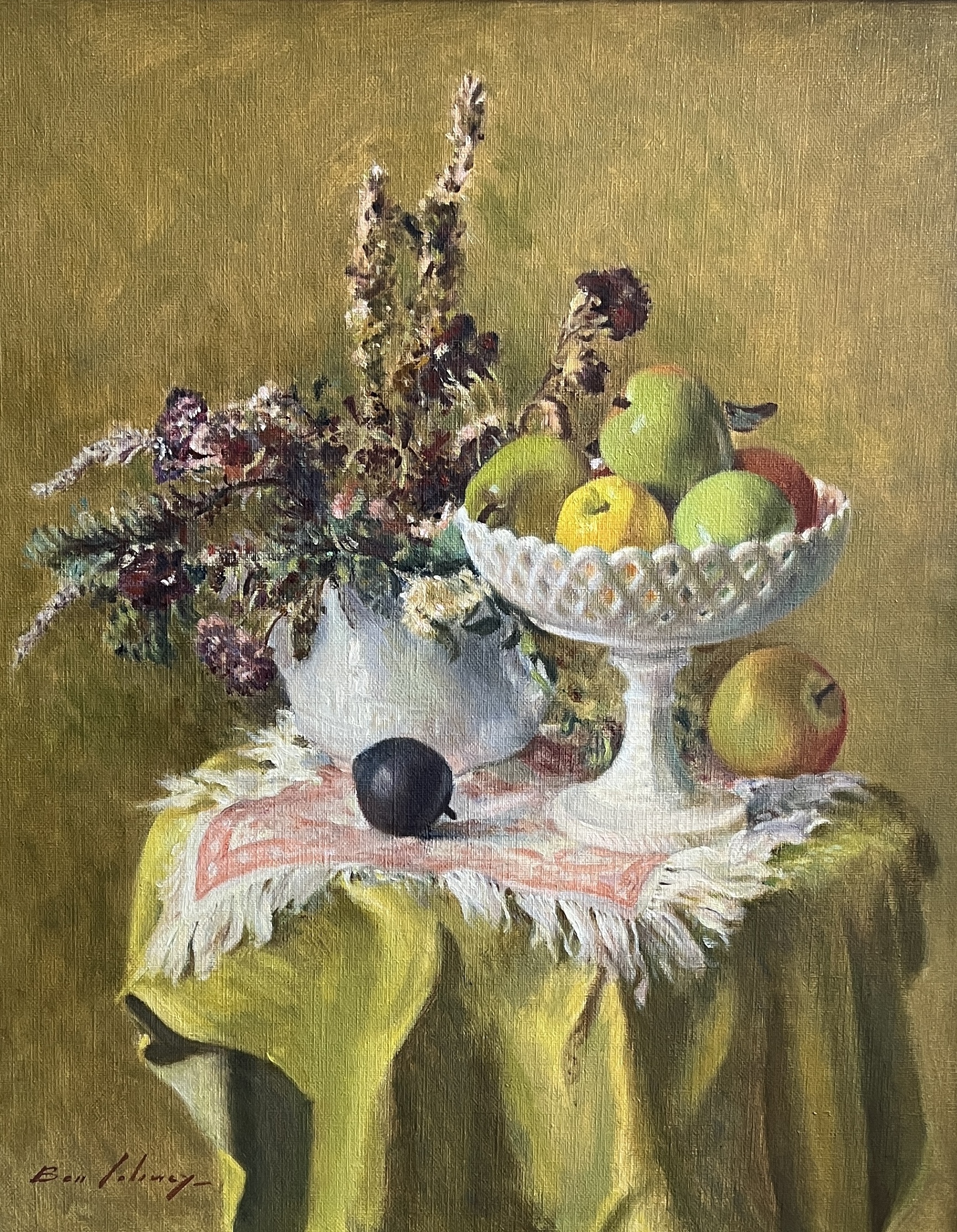
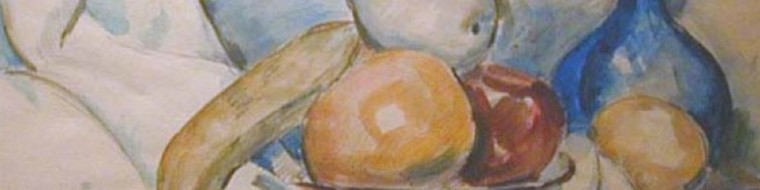
In Bucks County, Ben’s palette was transformed by the cool grey light of the area, and greens and browns are much more prevalent. The third still life, Still Life with Dried Flowers and Fruit, was certainly painted in Bucks County, anywhere from the late 1950s through the 1970s.

Still Life with Dried Flowers and Fruit. Oil on canvas, 30 x 25 inches.

The Russian napkin beneath the still life elements is a family heirloom brought from Russia. It shows up in Solowey paintings as early as 1924, and he would include it paintings throughout his career. The milk white bowl and vase are still in the studio, and even the vase in the Dried Flowers is in the studio , currently filled with Ben’s favorite flower, peonies.


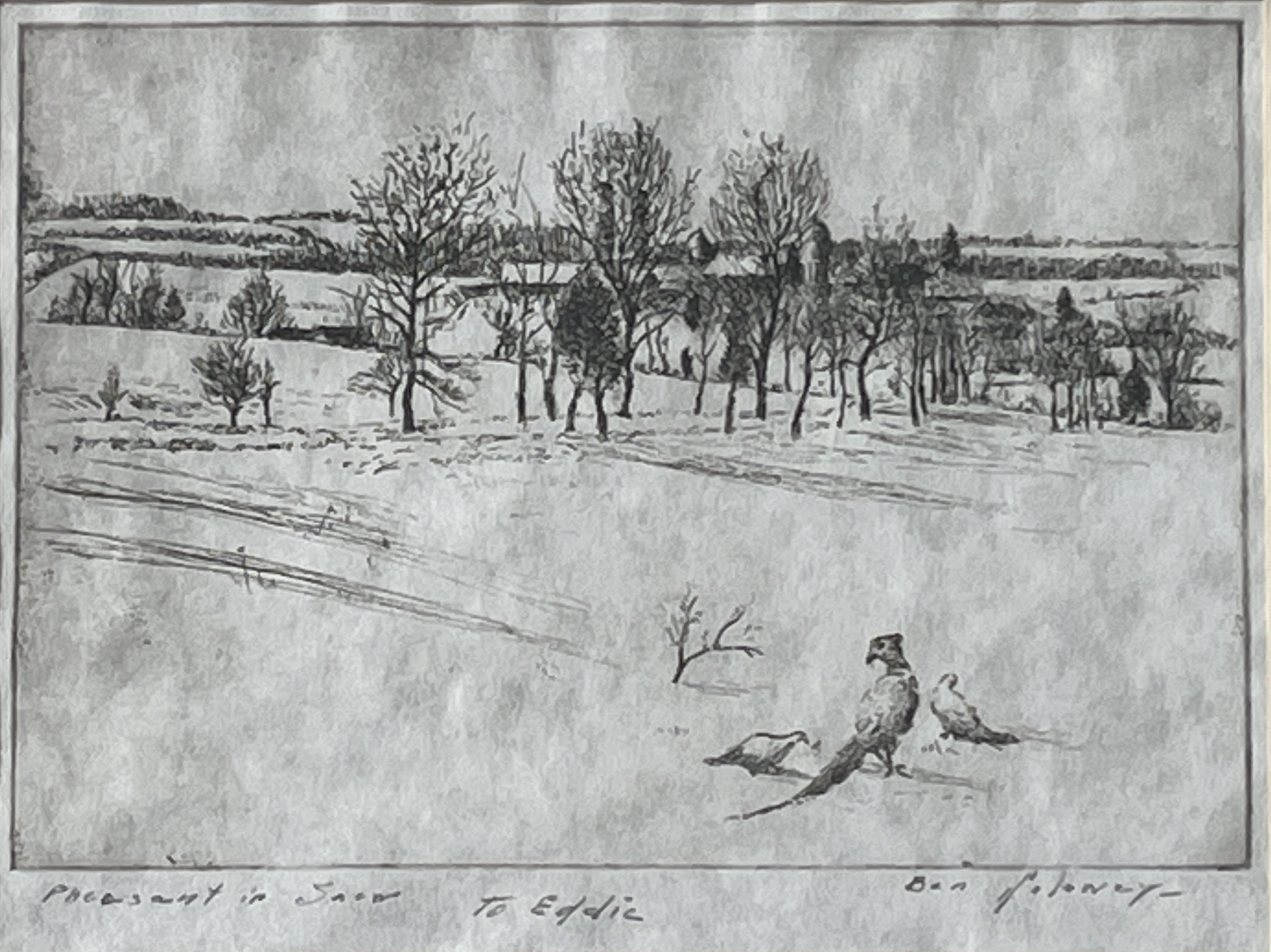
Pheasant in Snow. Etching

In a letter to her friend, writer Helen Papashvilly, Rae recalled Ben’s introduction to etching.

“The last time we visited Canada Lake, New York, in the Adirondacks [in 1974], one of the homes of our late friend, Paul Bransom, a great animal illustrator, and while retired many years, Paul retained his etching press in his studio there.

 With his usual curiosity in any and all media, Ben was examining this gargantuan machine. At which point, Paul said, “Ben if you’re at all interested in trying your hand, I’d like you to take this along to your studio.” Of course, Ben was elated at the thought of it. While I said nothing, wondered how this beyond -belief-in-size press could possibly fit into a car!

You’ll believe this or not, by Ben took the entire thing apart, tagged each section, stacked the whole thing, and when we returned to the studio – not one part lost or missing. He was able to get it into working condition without any effort! Even more remarkable, Ben asked a few questions, but essentially, by getting all the books he needed on etching, he did some quite remarkable etchings. At age 74, to feel inclined to attempt an entirely new medium, and so successfully, is a measure of his wide-ranging interests. He looked forward to doing so much more in this medium.”

The etching press was set by the windows in the Second Studio and many of the images are landscapes seen right outside those windows. In his final four years, Ben produced an impressive collection of prints, both etching and drypoint. Despite the fact the etching process could give him a number of identical prints of the same image, it is somewhat characteristic that Ben was continually experimenting, consequently making each print a unique work.

For instance, Ben might create a plate, and pull an initial print, then pull the next on a different type of paper. He might continue adding to the work and experiment with that version or “state.” He frequently made notations on the bottom left corner of a print as a record of the print’s evolution. Earlier prints were not considered inferior to succeeding prints, just different from the subsequent images. Ben never produced a numbered edition of any of his etchings and did not make notes of how many prints were pulled. Each work is unique

In the Reiskin Collection is an etching titled “Pheasant in Snow,” perhaps Rae’s favorite print. This particular print was inscribed “To Eddie,” who was the Reiskin’s son. It is the only known print of this image to be both titled and signed. It is also one of only two Solowey prints that were variations of an existing drawing. In our collection we have the original drawing with a mylar overlay with a hand drawn grid that Ben used to transfer the drawing in a smaller size to fit on his copper plate. In the transition, he added pheasants. Ben loved drawing birds, and on the shelf of his easel, visitors can see a scrap of board on which Ben drew a number of birds that he probably saw out his studio window. Birds in winter was a theme he repeated in drawings and in prints, and the Reiskin Collection also include two other etchings , A Flock of Birds, and one of the few non winter bird scenes, The Sail, which shows herons on Lake Nockamixon.

Ben began experimenting with sculpture in the early 1940s. His first work was a bust of Rae made from white clay. His next pieces were small works of the human figure. He made the clay models in his studio and then had them cast in plaster using animal gelatin molds created by Philadelphia craftsman, Pietro Suffredini. Ben would then paint on the patina much like it was a canvas, building the color to get exactly what he wanted.

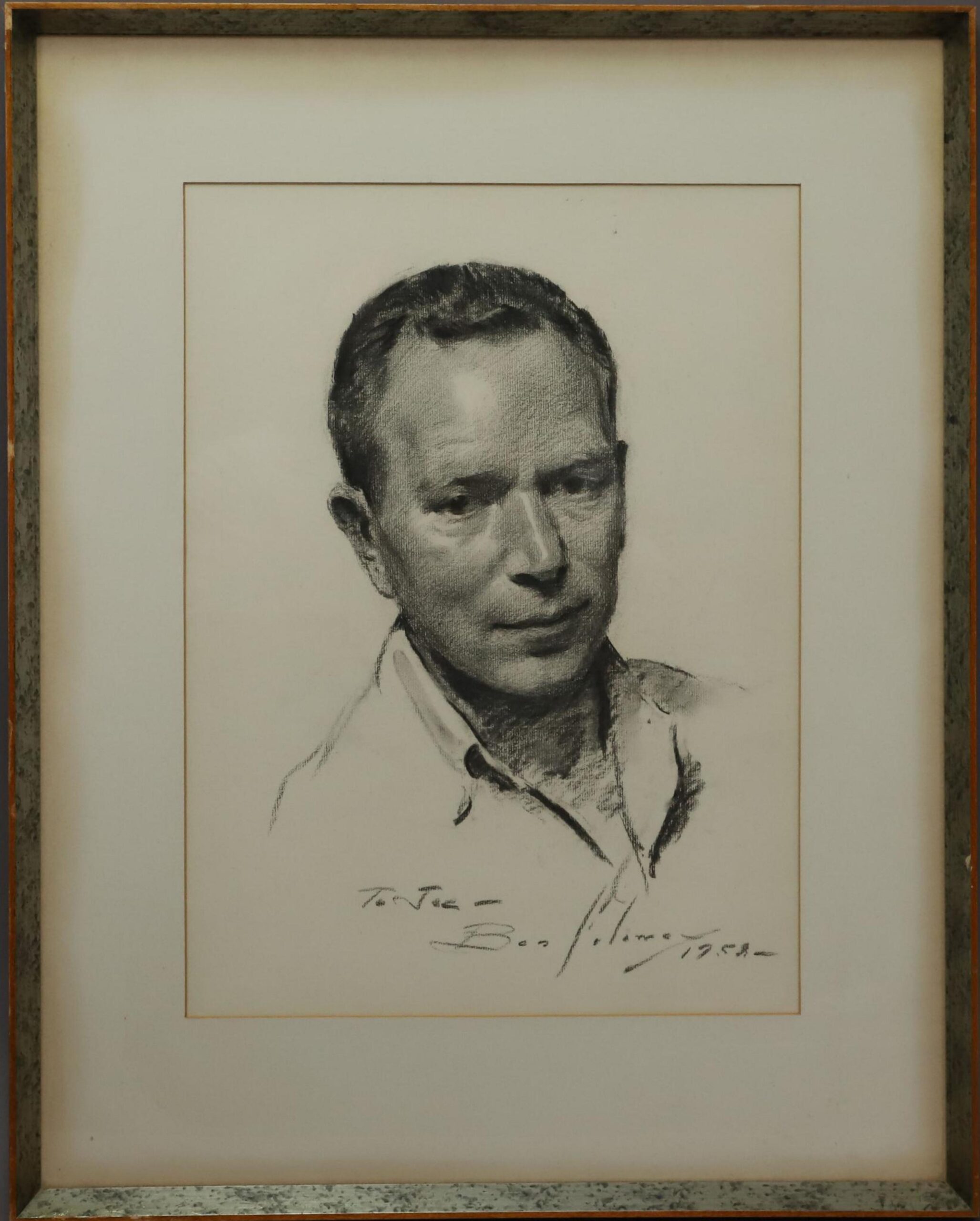
Charcoal portrait of sculpture Joe Greenberg by Ben Solowey.

Joe Greenberg. Charcoal on paper. 22 x 14 inches. 1958

When Suffredini became ill and moved away from the area, Ben felt stuck. He liked what he was doing and wanted to continue, but he was unsure how to proceed. Ben was teaching at the New Hope Fine Arts Workshop at the time alongside sculptor Joe Greenberg (which is also where Joan Reiskin met Ben for the first time). Greenberg had just returned from Italy, where he spent the last four years. While abroad he had a solo show in Rome and exhibited in the XXVI Venice Biennale. In 1951 the artist was awarded a $1,000.00 prize for winning the Metropolitan Museum of Art National Sculpture Exhibition.

Greenberg had grown up in the Philadelphia area and was delighted to be working with Ben Solowey. He had looked for the big Solowey canvases in area exhibitions for years. When Ben asked Greenberg to come up to his studio to look at his sculptures and critique them, Greenberg was happy to oblige. He drove from his Buckingham home to Ben’s studio in Bedminster thinking it was quaint when painters tried their hand at sculpture and was not expecting much. When he arrived at Ben’s studio and looked at the work Ben had created—all representational figures or portraits—he was surprised. Ben kept asking how he could make his work better, and Greenberg had no answers as the work was already so accomplished.

Ben soon explained his casting situation and Greenberg informed Ben how he could make his own rubber molds. He could see how Ben had mastered so many technical requirements in renovating his home and studio, and Greenberg was confident that Ben could make his own molds. Ben’s first attempt was a disaster, and the mold refused to set. He called Greenberg in a panic, and the sculptor came to the Solowey studio and helped Ben clean up and assured Ben that the recipe for the rubber mold was finicky, and the precise amounts of ingredients had to be added at exactly the right time to avoid another problem.

Ben’s next efforts were successful, and by the late 1950s he was making clay models with his own handmade tools on a sculpture stand he made himself, as well as making rubber molds to produce plaster casts.

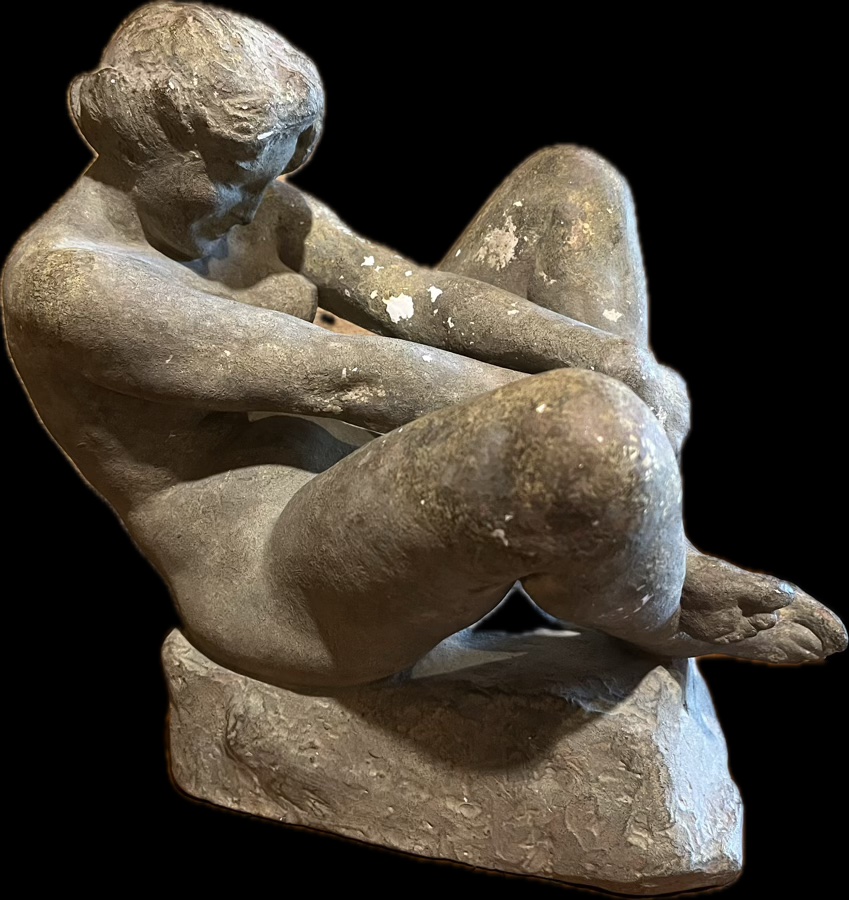
Among the works that Ben had sculpted and cast himself was Joyous, a relatively small piece of a seated female nude with her hands lifting one leg slightly. All the extant pieces that are documented all have a “stone” patina. The anatomical intricacy of the piece required several molds with the pieces then fused together.

We believe he later used a portion of the mold to create a new piece, Fragment that alludes to Classical Greek sculpture fragments of the human form. We don’t know how much later, and evidence suggests that he was working on Fragment in the 1970s. All the extant casts of Fragment have been left as pure white plaster, perhaps suggesting the limestones sculptures of the past.

The Reiskins acquired one of the first casts of Joyous, and this exhibition will be the first time it is shown alongside Fragment.

Joyous by Ben Solowey. Painted plaster to look like stone. Shows a seated female nude whose hands are slightly lifting one leg.

Joyous. Painted plaster. From the Reiskin Collection

Fragment. Plaster.


Mystery Woman

[Portrait of Dark Haired Young Woman]. Oil on canvas, 36 x 30 in. c. 1924-28

[Portrait of Dark Haired Young Woman]. Oil on canvas, 36 x 30 in. c. 1924-28

After Ben Solowey died in 1978, Allan and Joan Reiskin stopped to visit Rae on the farm when they came from Connecticut to visit Joan’s mother in the Philadelphia area. At that time, everyone entered the studio through Ben’s workshop, and when they entered the shop, Rae wiped her feet on what looked to be canvases on the floor. Upon closer inspection, the Reiskins discovered that the canvases were paintings. When they asked Rae about them, she said casually, “Oh these, I forgot to burn them.” Ben did burn canvases over the years that no longer met his criteria for keeping, or he simply needed the space. It is not surprising that he chose this work in that group, as was a painting from his youth, either when he a student at the Pennsylvania Academy of the Fine Arts in Philadelphia, or soon thereafter.

The Reiskins persuaded Rae to let them have the paintings so they could experiment with painting or cleaning. They had the three paintings professionally restored and they proved to be significant early works.

Who is this woman? When and why did she sit for Ben Solowey? These are the questions when encountering this painting for the first time. Ben Solowey attended the Pennsylvania Academy of the Fine Arts in Philadelphia on a scholarship from 1919 – 1923. For an artist with a natural talent, Ben reveled in the techniques, styles, and history he learned at the Academy. Once students were deemed proficient in drawing from the sculpture casts in the school’s basement, they moved on to “Life and Head” classes, where students painted and drew from live models. This painting may be from one of those classes, although it seems larger than a typical student’s work. It is also more accomplished than earlier portraits from the 1920s that we do have dates for.

The subject may have been a hired model or a friend. He also used members of his extended family, but after reviewing photo of family members from this time, we have effectively ruled out her being a family member. Even though Ben was still mastering the perspective of the arms and the hands in this painting, it is a strong painting of a woman who remains unknown.


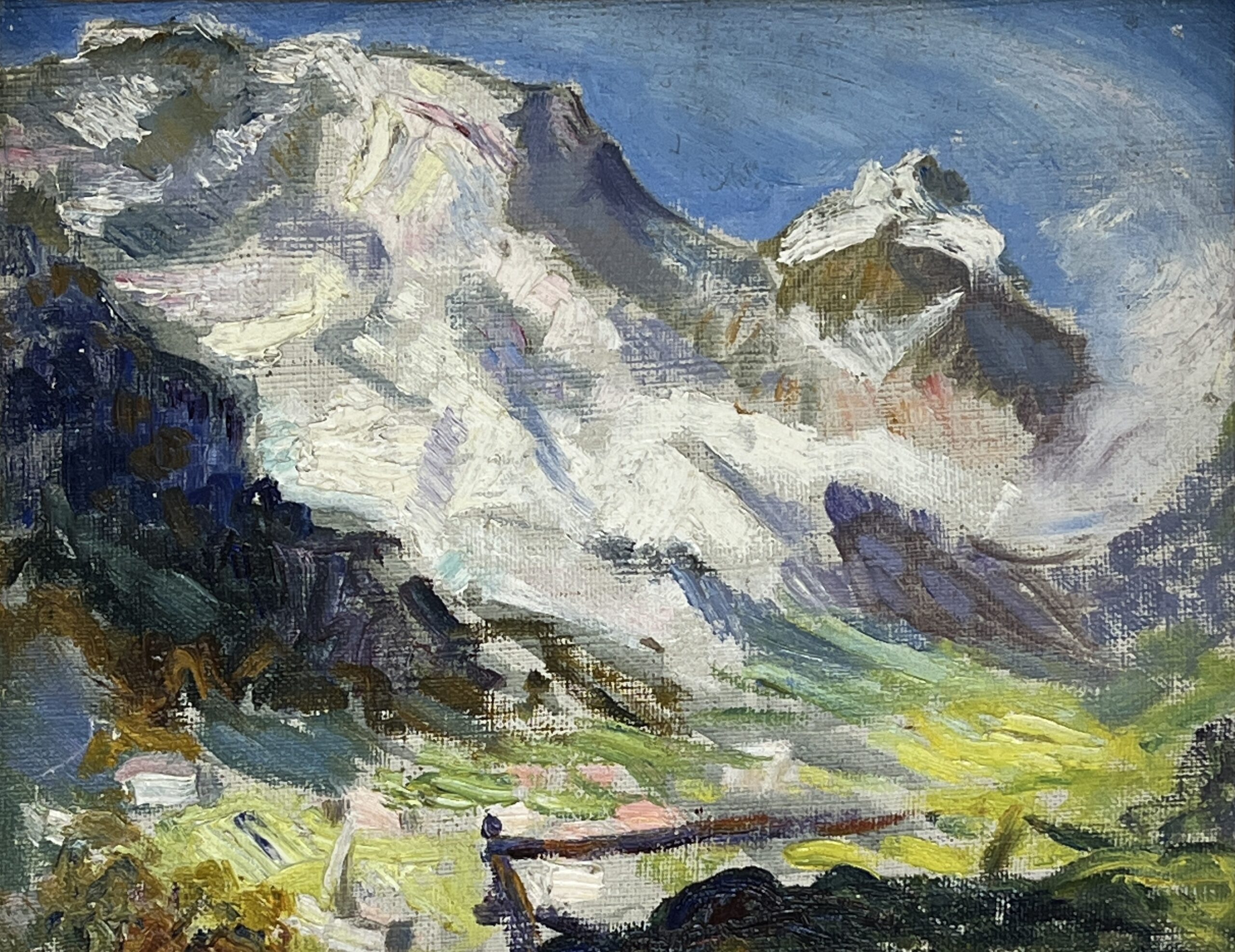
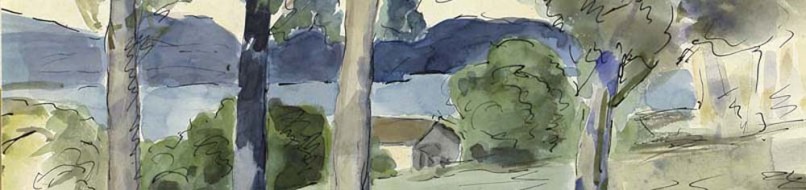
Mountains in EngelbergOil on board, 7 x 9 in. 1924 by Ben Solowey

Mountains in Engelberg
Oil on board, 7 x 9 in. 1924

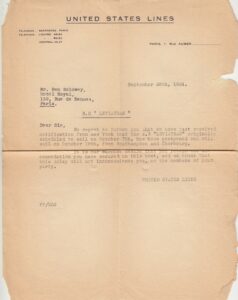
Ben’s five months in Europe ended with a trip to Switzerland to paint in Engelberg and Lucerne. Ben was able to take this trip to “the top of the world,” as a friend wrote on the back of a photo of Ben in the Swiss mountains, because he had received notification from the United States Lines that the S.S. Leviathan’s return trip to America was postponed. Instead of leaving on October 7, 1924, the ship would sail for New York on October 16th.

Presumably, Ben would have been pleased to have a few more days painting in Europe. Unfortunately, he may have rued those extra days. Cecilia Solowey, his 63-year-old mother suffered a fatal heart attack on October 9th, two days before her birthday. While he would have not made it home for the funeral, he could have participated in the week-long shiva for his mother had his ship left when originally intended.

For Ben, who had only recently celebrated his own 24th birthday on August 29th, this meant he returned home an orphan. His father, Abraham, had died in February 1924 when he was struck by a trolley in Philadel

phia while walking to synagogue on a Friday night. He was taken to the Presbyterian Hospital but was turned away because he was Jewish. By the time he taken to a second hospital he was dead. His death and another eventually lead the State Legislature to pass a law that required any hospital that received state funds to accept all emergency patients.

Letter to Ben Solowey in Paris from the United States Lines informing Ben that the S.S. Leviathan would be postponed on its return to America.

Ben had already left his family home, and he still had three brothers and one sister, plus assorted cousins, in the Philadelphia area, so he would not be without family. Yet the path he had chosen as an artist was one he go alone. He would never return to Europe. He stayed in Philadelphia for the next three years, supporting himself as a decorative painter. He spent more time on his own easel work which began to receive widening acclaim and awards. His journey as an artist had begun.


Older Posts »